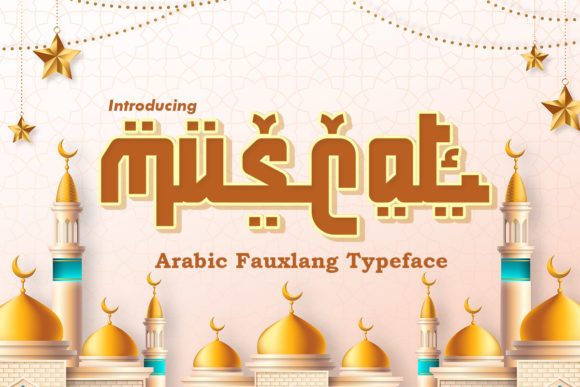
Muscat Display Font for Modern Digital Branding
Just last week, I was refining the hero section of a new coaching website—a clean, warm, image-led layout meant to feel both grounded and inspiring. The headline needed personality without sacrificing clarity. I tried three serif fonts, two minimalist sans serifs, and even a subtle script—but none landed quite right. Then I dropped in Muscat, and everything clicked. Not because it’s loud or flashy, but because Muscat is an incredibly cool display font. Its modern yet whimsical style gave the headline presence, warmth, and just enough character to signal “this brand has taste”—without demanding attention at the expense of readability.
Muscat for Hero Sections and Landing Page Headlines
Muscat shines brightest where you need instant visual impact: hero banners, campaign landing pages, and product launch headers. As a display font, it’s built for scale—not body copy. I used it at 64px on desktop and scaled down thoughtfully to 48px on tablet and 36px on mobile (with tight line-height and generous letter-spacing). It held up beautifully over a soft gradient background, and with its PUA encoded glyphs, I could easily swap in alternate swashes or stylistic ligatures for subtle polish—no CSS hacks, no fallback confusion. Because Muscat is designed as a display font, it thrives when paired with a highly legible sans serif like Inter or Manrope for paragraphs and CTAs. That contrast creates rhythm, hierarchy, and breathing room.
Muscat for Boutique Online Stores and Creative Shop Banners
For a small ceramics studio launching their first online shop, we needed typography that felt handmade but never childish—elegant, intentional, quietly joyful. Muscat delivered exactly that. We applied it only to category headers (“Hand-Thrown Mugs”, “Limited Edition Glazes”) and the “New Arrivals” banner tagline. Crucially, we avoided using Muscat on buttons or price tags—those stayed in a crisp, neutral sans serif. Why? Because while Muscat is an incredibly cool display font, its whimsical energy works best in short bursts. Overuse dilutes impact and risks undermining trust. On product cards, we kept Muscat reserved for decorative accents—like a tiny “✨” glyph next to “Locally Fired” in the description—leveraging its PUA encoding to pull in custom icons without loading extra icon fonts.
Muscat for Portfolio Websites and Creative Brand Kits
A freelance illustrator asked me to refresh her portfolio homepage—and her original type choices felt too safe. She wanted her work to feel *alive*, not clinical. We swapped her default heading font for Muscat, then tightened spacing, added subtle tracking, and used it exclusively for her name in the masthead and project titles (“Watercolor Portraits”, “Editorial Illustration Series”). The result? A stronger sense of authorship and voice—without compromising scannability. As a display font, Muscat helped unify her brand kit across web, social graphics, and digital pitch decks. Because it’s PUA encoded, she could consistently access stylistic alternates across platforms—no missing characters in Figma exports or inconsistent rendering in Canva templates.
Muscat for Course Sales Pages and Digital Learning Brands
When designing a sales page for a writing course focused on storytelling and creative confidence, tone mattered more than ever. The headline needed to feel human—not corporate, not academic, not overly playful. Muscat struck that balance: modern enough for a digital-first audience, whimsical enough to suggest imagination and ease. We used it for the main headline and subheadline only—never for bullet points, testimonials, or pricing tables. For those, we chose a warm, open sans serif with generous x-height and clear punctuation. That pairing made the page feel cohesive *and* functional. And because Muscat is an incredibly cool display font, it supported the emotional hook (“Write With Wonder”) without distracting from the practical value (“12 lessons, lifetime access, downloadable workbook”).
Muscat for Blog Headers and Editorial-Led Digital Content
I recently redesigned a slow-growing design blog aiming to stand out in a sea of minimal tech publications. Their old headers felt sterile; readers scrolled past without pausing. With Muscat, we introduced gentle contrast: headlines in Muscat (48px, medium weight), bylines and intro paragraphs in a refined serif like Literata, and body text in a highly readable sans. The effect? Higher dwell time on article pages—especially on mobile, where the font’s open counters and balanced proportions remained legible even at smaller sizes. Just remember: Muscat works best as a display font above the fold or as a section divider—not as paragraph text. Its PUA encoding also made it easy to insert custom bullets or chapter markers, adding editorial flair without bloating the page.
Muscat for Responsive Design and Cross-Platform Consistency
One thing I always test early: how does Muscat behave on iOS Safari, Android Chrome, and Windows Edge? Good news—it renders cleanly across all major browsers when served as a properly optimized WOFF2 webfont. No jagged edges, no unexpected kerning shifts. Because it’s PUA encoded, there’s no risk of glyph substitution on older systems—every stylistic alternate appears exactly as intended. Still, I recommend checking your font files for included weights (most display fonts like Muscat ship with one or two weights, not full families) and verifying commercial licensing before deploying on client sites or SaaS dashboards. Also, avoid layering Muscat over busy image backgrounds unless you add a subtle text shadow or semi-transparent overlay—its delicate forms need contrast to stay legible.
Muscat for Logo Text and Branded Web Accents
While Muscat isn’t a logo font per se, it’s perfect for secondary logomarks, wordmarks in hero sections, or stylized site badges (“Est. 2022”, “Made With Care”). Its modern yet whimsical style gives digital brands a memorable signature—especially when used sparingly alongside strong supporting typography. Think of Muscat as your brand’s “smile”: present, intentional, and human—but never the whole face. As a display font, it belongs in moments of emphasis, not endurance. And because it’s PUA encoded, you’ll have full control over special characters, numbers, and symbols—making it viable for dates, pricing callouts, or limited-edition labels without switching fonts mid-layout.